

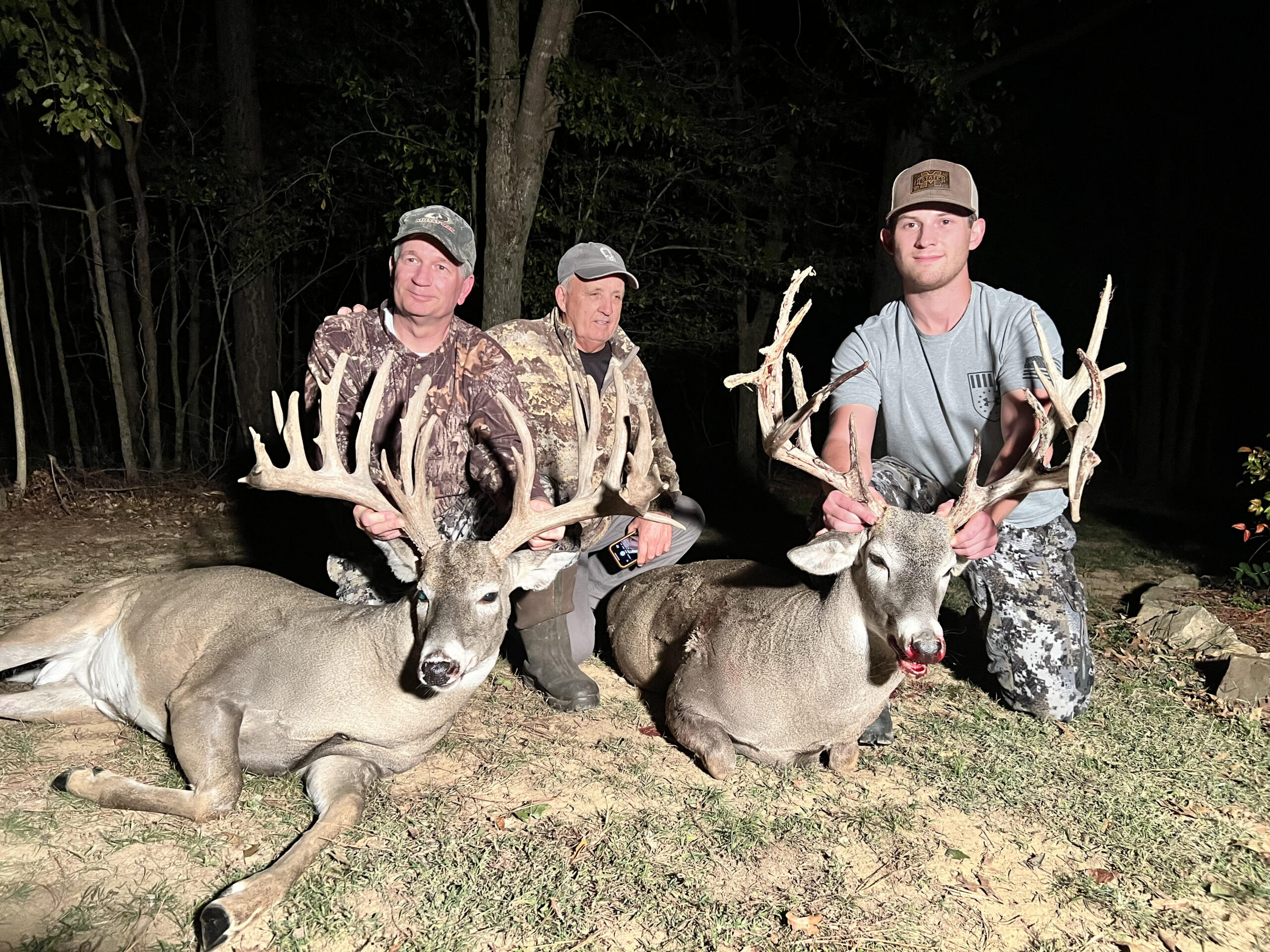
Best States for Trophy Whitetail Hunting (And Why Illinois Belongs at the Top)
Every serious trophy hunter eventually sits down with a map and starts narrowing the list. The best states for trophy whitetail hunting share a handful of traits: mature buck genetics, low hunting pressure relative to deer density, agricultural food sources that push antler growth, and seasons structured to let bucks reach their potential. The problem is that most lists online were written by someone who has never sat in a stand at 28 degrees waiting for a 180-class deer to step out of a river-bottom thicket.
This breakdown is different. It covers the states that genuinely produce record-class whitetails, explains why each one earns its reputation, and makes an honest case for why Illinois, specifically the southern corridor, belongs in the same conversation as Iowa and Kansas. If you're still deciding where to invest your vacation days and your tag money, read this before you book.
What Makes a State Great for Trophy Whitetail Hunting?
Not every state with a large deer herd produces trophy-class bucks. High harvest numbers tell you about deer density. The record books tell you something more useful: which states consistently grow old, heavy-antlered deer.
Four factors separate elite trophy states from the rest:
- Genetics and age structure. Bucks need to reach 4.5 to 6.5 years old to max out their antler potential. That only happens where hunting pressure is low enough to let them survive.
- Agricultural nutrition. Corn, soybeans, and alfalfa corridors fuel antler mass in ways that timber country simply can't match. The Midwest's grain belt is not an accident; it's a biological advantage.
- Season structure and regulations. States with limited antlerless tags, antler restrictions, or short firearms seasons protect more mature bucks year over year.
- Boone and Crockett entries. The Boone and Crockett Club's records database is the most objective benchmark available. States with consistent, high-volume entries aren't there by luck.
Keep those four criteria in mind as you read through the state-by-state breakdown below. They're the lens that separates honest analysis from hype.
The Top States for Trophy Whitetail: An Honest Breakdown
Seven states dominate serious trophy hunting conversations year after year. Here's a candid look at each one.
Iowa is the gold standard for many hunters, and it earns that reputation. Iowa consistently ranks among the top states for Boone and Crockett entries per square mile. Non-resident tags are limited and awarded by lottery, which is exactly why the deer live longer there. The competition for those tags is fierce, and waiting periods of three or more years are common. If you draw, you're hunting one of the best whitetail states on the continent.
Kansas produces enormous bucks out of its river-bottom and agricultural counties, particularly in the northeastern part of the state. Non-resident licenses are over-the-counter for archery, which makes Kansas accessible in ways Iowa is not. The tradeoff is that pressure in the most productive units has increased noticeably over the last decade.
Wisconsin surprises some hunters who associate it more with public-land culture than trophy production. The southwestern counties along the Mississippi River corridor grow deer that routinely crack 150 inches gross. Hunter density in those areas is real, but the genetics are there.
Ohio has quietly become one of the most consistent trophy producers in the country. The Quality Deer Management Association's Whitetail Report has highlighted Ohio multiple times for its buck age structure and antler quality. Private land access largely determines your outcome here.
Kentucky is underrated. The combination of ridge-and-hollow topography, minimal hunting pressure in rural counties, and strong crop agriculture in the western part of the state produces mature deer that don't get nearly enough national attention. Non-resident tags are available over the counter.
Missouri sits in the middle of the Midwest whitetail belt and benefits from the same food sources and genetics as its northern neighbors. The Ozark and agricultural transition zones are particularly productive. Pressure is moderate, and the state's liberal season structure offers flexibility.
Illinois belongs in the top tier of this list, and the next section explains exactly why. The short version: Illinois has produced more Boone and Crockett entries than almost any other state, and its southern counties remain less pressured than comparable ground in Iowa or Kansas.
Why Illinois Consistently Produces Giant Bucks
Illinois has appeared in the Boone and Crockett record books more times than most hunters realize. The state's total entries across typical and non-typical categories place it among a very short list of elite trophy producers, and that track record spans decades, not just a single banner year.
The reasons aren't mysterious. Southern Illinois sits at the intersection of the Mississippi River corridor to the west and the Ohio River corridor to the east. Deer in that region have been using those travel routes for thousands of years. The terrain funnels movement in ways that make hunting more predictable. Mature bucks that would disappear into 50,000 acres of timber in Wisconsin or Kentucky get channeled through creek bottoms and agricultural edges in southern Illinois in ways that actually give a hunter a reasonable opportunity.
Nutrition is a significant factor. Southern Illinois counties are heavily farmed, with corn and soybean rotations that load bucks up with protein and carbohydrates through summer and fall. The result is antler growth that routinely surprises out-of-state hunters who assumed the big deer all lived in Iowa. If you want a deeper look at what buck scores actually look like on Illinois ground, this Illinois trophy buck size guide breaks down average scores and what to realistically expect.
Hunter density in southern Illinois is meaningfully lower than in the northern part of the state and lower than in many comparable Iowa or Kansas counties that have attracted national attention. That matters enormously for buck age structure. A 5.5-year-old deer in southern Illinois is a realistic target. In heavily pressured states, that same buck doesn't survive long enough to become that deer.
The rut timing in Illinois also lines up well. Peak breeding activity typically runs from late October through mid-November, which overlaps with the classic Midwest rut window. Booking around that period gives hunters the best chance of seeing daylight movement from mature bucks that spend most of the season nocturnal. For specific month-by-month breakdowns on when to target different score classes, this guide on the best months for 170, 180, and 200-class bucks in Illinois is worth reading before you pick your dates.
The Midwest Advantage: Food, Genetics, and Pressure
There's a reason the best states for trophy whitetail hunting are almost all in the Midwest. It's not one thing; it's the combination of grain agriculture, low human population density in rural counties, and a cold climate that drives deer to feed aggressively in fall and build body mass that translates to antler mass.
States in the Southeast can grow big deer, but they're fighting lower nutritional density in native browse and warmer winters that don't push the same feeding intensity. States in the Northeast have the genetics but carry some of the highest hunter-per-square-mile ratios in the country, which hammers buck age structure hard.
The Midwest sweet spot, running roughly from southern Wisconsin down through Iowa, Illinois, Missouri, Kentucky, and Ohio, hits the right combination of everything. Add private land culture, where landowners have been managing buck age structure intentionally for 20-plus years on many farms, and you get a region that produces trophy-class deer at a rate no other part of the country can match consistently.
Understanding how deer respond to weather fronts and temperature drops during this window matters as much as picking the right state. How weather affects deer movement is one of the more overlooked variables in Midwest trophy hunting strategy.
High-Fence vs. Free-Range: How the Hunting Model Affects Your Odds
The state you hunt matters. The hunting model you choose matters just as much when it comes to consistency of outcomes.
Free-range public-land hunting in Iowa or Kansas gives you access to genuinely wild deer, but it also means competing with other hunters, dealing with unpredictable access, and accepting that a mature buck you've been patterning could move off the property the week you arrive. The experience is real, and the reward when it comes together is earned. It's also the model most likely to produce a blank tag, especially on a first trip.
Private preserve hunting, including high-fence operations, trades some of that uncertainty for a different kind of experience. Managed genetics, controlled hunting pressure, and professional guides who know the land intimately change the odds in ways that matter to hunters with limited vacation time and specific goals.
Neither model is objectively better. They answer different questions. If you're still working through how those two approaches compare in terms of experience, ethics, and outcomes, this high-fence vs. free-range comparison covers the key differences honestly.
How to Choose the Right State for Your Trophy Hunt Goals
Be specific about what you actually want from the trip. The answer changes the math significantly.
If you want the lottery experience and don't mind waiting years for a tag, apply for Iowa. It's worth the wait if you have the patience. If you want over-the-counter access to solid trophy ground, Kansas archery or Kentucky offer real options without a draw system.
If you want a managed, guided experience with predictable outcomes and all-inclusive logistics, a private preserve in Illinois is a different category of trip entirely. You're not gambling on public land access or hoping your scouting from last year still holds. You're hunting with people who live on the property and know which deer are where.
Consider these questions before booking anything: How many days can you realistically take? Do you need a guaranteed tag opportunity or are you comfortable with a fair-chase outcome that may or may not produce a shooter buck? What score class are you targeting? Those three answers will narrow the field quickly.
For out-of-state hunters specifically, what surprises out-of-state hunters in Illinois every year is worth reading before your first trip to the state, regardless of how you plan to hunt it.
Why Serious Trophy Hunters Keep Coming Back to Southern Illinois
The hunters who come to southern Illinois once and come back are not coming back because it was easy. They're coming back because the deer are real, the ground is legitimate, and the experience delivers what it promises.
Southern Illinois combines everything that makes the Midwest the top trophy whitetail region in the country, with the added advantage of being genuinely underutilized compared to Iowa and Kansas. The river corridors funnel deer. The agriculture loads them up. The regulations protect mature bucks. And the outfitters who operate on managed private ground in that region have decades of combined experience reading the land and putting hunters in the right position at the right time.
If Illinois is on your list, and after reading this it should be, Cedar Ridge Whitetails in southern Illinois offers guided trophy hunts with all-inclusive lodging packages designed for hunters who want a serious, managed experience. Explore what a guided trophy hunt at Cedar Ridge looks like here.
Frequently Asked Questions
Is Illinois a top state for trophy whitetail hunting?
Yes. Illinois consistently ranks among the top states for Boone and Crockett whitetail entries and has a long record of producing 170-plus inch bucks, particularly in the agricultural river-bottom counties of southern Illinois. Lower hunter density compared to Iowa and Kansas, combined with rich grain agriculture and natural terrain funnels along the Mississippi and Ohio River corridors, gives Illinois a legitimate claim as one of the best states for trophy whitetail hunting in the country.
What states produce the most Boone and Crockett whitetail entries?
Iowa, Illinois, Wisconsin, Ohio, and Kansas are consistently among the top producers of Boone and Crockett whitetail entries. The common thread across those states is Midwest grain agriculture, relatively low hunting pressure compared to deer density, and private land management that allows bucks to reach mature age classes. The Boone and Crockett Club's records database is the most reliable source for tracking state-by-state trophy production over time.
How does hunting pressure affect trophy buck quality by state?
Hunting pressure is one of the most direct drivers of buck age structure, which in turn drives antler quality. When hunters harvest bucks at 1.5 to 2.5 years old before their antlers have reached genetic potential, average scores across a region drop sharply. States with limited non-resident tags, antler point restrictions, or a strong private land management culture tend to have older deer and higher average scores. That's a major reason Iowa's lottery system, despite the frustrating wait, produces the caliber of deer it does.
Is a guided hunt on a private preserve better than a DIY public-land hunt for trophies?
It depends on what you're optimizing for. A DIY public-land hunt in a top-tier state offers genuine fair-chase experience and no lodging or guide fees, but it also carries real risk of returning without a shooter opportunity, especially on a first or second trip. A guided hunt on a managed private preserve trades some of that uncertainty for consistency: professional scouting, controlled hunting pressure, knowledge of individual deer on the property, and logistics handled for you. For hunters with specific score targets and limited days afield, a guided preserve hunt typically produces more predictable outcomes. Learn how Cedar Ridge structures its guaranteed trophy hunt program.
What time of year is best for trophy whitetail hunting in the Midwest?
The rut is the single best window for trophy whitetail hunting across the Midwest, including Illinois. Peak breeding activity in Illinois typically runs from late October through mid-November, with the first two weeks of November often producing the most consistent daylight movement from mature bucks. Cold fronts during that window accelerate activity significantly. Early season (late September through mid-October) can also be productive on food sources before pressure builds. For a detailed month-by-month breakdown, this guide on booking around peak rut action in Illinois covers the timing in depth.
The best states for trophy whitetail hunting share a short list of traits: mature genetics, agricultural nutrition, low enough pressure to let bucks age out, and terrain that makes hunting them a realistic proposition. Iowa, Kansas, Wisconsin, Ohio, Kentucky, and Missouri all deserve their reputations. So does Illinois, and southern Illinois in particular makes a case that holds up against any comparable ground in the country.
If you're ready to stop comparing and start planning, Cedar Ridge Whitetails offers guided trophy whitetail hunts in southern Illinois with all-inclusive lodging packages built for hunters who take this seriously. See what a guided trophy hunt at Cedar Ridge looks like and start planning your trip.
Leave A Comment