

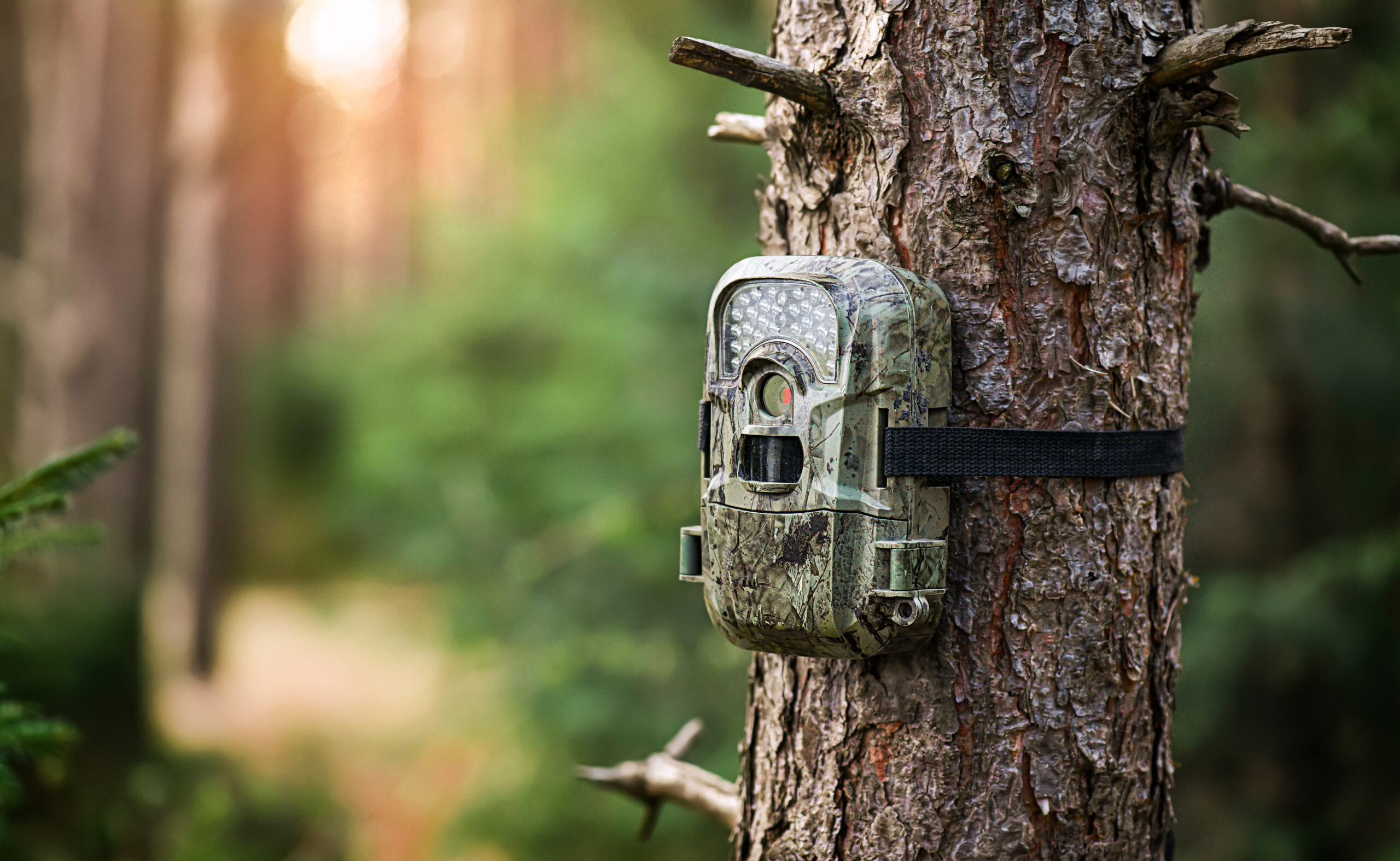
Why Camera Angles Matter For True Antler Spread
Every whitetail looks bigger in our heads than on the card. The real challenge is getting a true read on antler spread from a trail camera. Perspective and distortion can play tricks. A buck that is quartering away might look wider than he is. A high mount can make beams seem shorter. A wide lens can push tips outward. If you want the confidence to tag a buck that meets your goals, your camera placement must control these variables.
At Cedar Ridge Whitetails in southern Illinois, we lean on three simple, repeatable trail camera angles that flatten perspective and turn photos into reliable measurements. Use them on your ground or test them during a guided hunt with our team. With the right setup, your next card pull will not be guesswork. It will be data you can trust.
The 3 Proven Trail Camera Angles That Reveal True Spread
Angle 1: Head-On, Level, And Controlled At A Neck-Stop
Nothing beats a clean head-on shot when the camera and the deer’s skull are on the same level. This angle lets you see both beam tips at equal distance from the lens, which reduces distortion. The trick is creating a natural neck-stop that encourages the buck to square up and hold still for a beat.
How to build a neck-stop and get perfect head-on photos:
- Pick a predictable pause. Use a mock scrape, a natural scrape on an overhanging branch, or a mineral site where legal. Bucks will stop, sniff, and face the source.
- Mount your trail camera 24 to 30 inches off the ground so the lens is at neck and skull height for a mature buck.
- Place the camera 15 to 22 feet from the stop point, centered on the line of approach. The sweet spot is 18 feet in most timber. This reduces wide-angle distortion yet keeps strong detail.
- Square the camera precisely. Use a small level and point the lens straight at the scrape or lick. Avoid any upward or downward tilt.
- Add a reference. Sink two slim stakes exactly 20 inches apart behind the scrape line or paint two small dots on the tree at a known spacing. They should be on the same plane as the deer’s head when he stops. This reference allows exact pixel-to-inch conversion later.
Why it works: A level, dead-ahead photo is less vulnerable to lens-induced stretching. The reference markers give you a scale. With the buck’s face forward, you can measure inside spread across the beams at their closest points and also greatest spread across tip-to-tip if visible. Cedar Ridge Whitetails uses this angle on community scrapes along cedar thickets and oak edges where bucks pause predictably and pose.
Angle 2: Quartering-Toward At 45 Degrees With A Cross-Track Calibrator
When bucks move fast or avoid facing a camera head-on, a 45-degree quartering-toward angle shines. At this angle the skull remains close to the lens plane, while the body gives you depth for age reads. You still need a way to lock in scale and limit stretching.
How to set a reliable quartering-toward angle:
- Find a narrow travel lane where deer hug the same line, like a fence jump, a creek notch, or a draw that pinches down.
- Set a trail camera 45 degrees off the track, 20 to 24 feet from where you expect the head to pass. Keep the lens at 28 to 36 inches high for mature bucks.
- Place a cross-track calibrator. Lay a natural looking pole, log, or low stick perpendicular to the trail and mark two subtle dots on it 20 inches apart. You can also use a cut sapling with burned-in inch marks. Position it within a foot of the line where the buck’s head will pass, but not so close it changes behavior.
- Fine tune the aim so the focal point is where a nose naturally points while cruising. Use burst photo mode to capture the exact instant when the head is closest and most square to the lens.
Why it works: Quartering-toward shots often show both beams and tips without ear flare hiding them. The cross-track calibrator gives you a scale on the same plane as the head. This angle is especially clutch on field edge entries at Cedar Ridge Whitetails where prevailing wind encourages bucks to scent-check while angling in, giving you clear, repeatable passes at an angle they prefer.
Angle 3: Overhead Vertical Mount For Perspective-Free Measurements
Top-down photos all but erase perspective problems. When a buck stands under a vertical mount, the distance from lens to each beam tip is nearly the same. This makes pixel measurements far more accurate. It also works when bucks refuse to square up on a scrape or keep slipping by your quartering sets.
How to run a vertical overhead angle safely and effectively:
- Choose a high-traffic pause where deer feed or lick. Mineral sites where legal, a bait site where allowed, or a water hole in hot weather are ideal. On preserves like Cedar Ridge Whitetails, food plots and water edges with tight trails work well.
- Mount the trail camera 9 to 12 feet directly above the pause point. Use a solid tree bracket. Angle the lens straight down. Ensure the mount is secure and safe to install.
- Place a known-size object in the same plane as the buck’s head. Options include a 10-inch mineral block, a cut board measured to 18 inches, or a small flat rock with two painted dots exactly 20 inches apart. Keep it low profile and natural.
- Set a tight detection zone so the camera triggers only when a head is centered under the lens. Adjust sensitivity and aim to avoid false triggers from wind and branches.
Why it works: Gravity and geometry are on your side. A top-down shot flattens skew and equalizes distance from lens to antler tips. You can measure inside spread between the beams or the greatest spread across tips with higher confidence. We like this angle during late summer at Cedar Ridge Whitetails on shaded mineral licks along cedar and pine thickets, where velvet bucks linger and hold their heads still while licking.
Turn Photos Into Measurements You Can Trust
Great angles mean nothing without a simple way to convert pixels to inches. Pair your trail camera images with a visible, known-size object and you can calculate spread in minutes on your phone.
- Pick your reference. Use those two 20-inch stake marks, the cross-track calibrator, or the mineral block dimension you recorded.
- Open the photo in a measurement app or any editor that shows pixel distance. If your app does not show pixels, you can use a simple grid overlay and note proportional distances.
- Measure the pixel length between your two reference marks. For example, say the 20-inch markers measure 400 pixels.
- Find the pixel distance between the two antler beams at the inside spread point on the same photo and same frame. Say that measures 460 pixels.
- Compute the scale. If 400 pixels equals 20 inches, then 1 inch equals 20 pixels. This means 460 pixels equals 23 inches.
- Repeat the process for the greatest tip-to-tip spread if both tips are visible on the same plane. Avoid frames where one tip is clearly closer to the lens than the other.
- Verify with at least two more frames of the same buck at similar posture. Average the results.
- Log the buck with date, time, location, and spread measurements so you can compare across weeks as he matures or hardens.
Backup method when you lack a reference: you can estimate using ear width on a mature Midwest buck, often around 6 to 7 inches. Compare tip-to-tip width against both ears fully alert and forward. This is a rough check, not a final measurement. At Cedar Ridge Whitetails we always prioritize a visible, known dimension in the frame, since it removes guesswork.
Trail Camera Settings That Make Or Break The Shot
- Trigger speed: Faster is better for crisp antler tips. Aim for 0.2 to 0.4 seconds.
- Burst mode: Set 3 to 5 photos per trigger. The middle frame often shows the most square head position.
- Recovery time: Keep it short so you get multiple angles as a buck investigates a scrape.
- Resolution: Use the highest photo resolution your card can handle. Detail matters on beams and tips.
- Night performance: Choose no-glow or low-glow IR. To reduce blur, select photo over video at night and use a camera with strong IR illumination and fast shutter control.
- Detection width: Narrow it to keep the focal subject centered and to reduce side triggers that catch a buck mid-stride with a turned head.
- Angle of view: If your camera has adjustable FOV, use a normal view rather than ultra-wide to reduce edge distortion.
- Distance: Step the camera back and crop later. A little distance calms distortion and still yields clean detail at high resolution.
- Time-lapse plus motion: Use time-lapse during midday on food plots to capture head-on shots of bucks that browse slowly.
- Power and memory: Run lithium AAs or external power, and use high-quality SD cards. Format cards in the camera before deployment.
- Maintenance: Clean the lens, check the level, and remove grass or twigs in the detection zone.
- Scent and pressure: Wear gloves, minimize visits, and mount discreetly. Bucks notice pressure more than light.
Where To Place Your Trail Cameras On A Midwest Preserve
Southern Illinois habitat is built for funneling deer. Cedar Ridge Whitetails spans mature timber, pine and cedar thickets, tight draws, cornfields, and food plots. Each setting offers a best-in-class angle to reveal true spread if you time it right.
- Late summer velvet: Run the overhead vertical angle on mineral sites tucked in shaded cedar thickets. Bucks linger, and top-down shots stay clean.
- Early season field edges: Use the quartering-toward 45-degree angle on entry trails from timber to cornfields. Add a cross-track calibrator where the head passes.
- Pre-rut scrapes: Deploy the head-on neck-stop angle on community scrapes along oak ridges and in the mouth of thick draws. Bucks will square up for your camera as they work branches.
- Rut funnels: Mix head-on and quartering angles in pinch points. Mount two trail cameras at different angles on the same funnel to confirm spread and age in one pass.
- Post-rut food: As deer conserve energy, place cameras near food plots with a vertical setup and a known reference on the ground. Tired bucks feed longer, offering clearer shots.
Common Mistakes And Quick Fixes
- Mounting too high or too low: Keep the lens on the same level as the skull for head-on and quartering shots.
- Getting too close: Wide-angle distortion is worst at short distances. Back up to 18 to 24 feet.
- Facing the sun: East or west facings can wash out tines at certain hours. Aim north when possible.
- Ignoring brush: Clear the detection zone. Grass and twigs trigger false shots and block antlers.
- Skipping a reference scale: Always add a known-size object or marks in the frame. It turns photos into measurements.
- Relying on one angle: Run at least two angles in key spots. Confirm your read with multiple frames.
- Forgetting burst mode: One frame misses subtle head movements. A burst catches the perfect square-up.
- Stale batteries: Weak power can slow triggers and dim IR. Use fresh lithiums or external power.
- Dirty lens: A foggy or dusty lens smears tine edges. Wipe it before leaving.
- Cluttered cards: Label locations and dates so you can compare angles and remeasure with confidence later.
Real-World Flow: From Setup To Spread Number
Here is a simple field flow that works on any property and that we also use at Cedar Ridge Whitetails:
- Pick a high-odds location. Choose a scrape, pinch, or plot edge with clear deer traffic.
- Choose the right angle. Start with the head-on neck-stop. Add a second camera at 45 degrees.
- Build your reference. Place two discreet marks 20 inches apart in the same plane as the deer’s head.
- Dial your settings. Fast trigger, 3 to 5 shot burst, high resolution.
- Wait for stable weather. Deploy in stable patterns so bucks move predictably.
- Pull and verify. Sort for frames with the most square head position and visible reference.
- Measure with pixels. Convert pixels to inches, then average two or three frames.
- Decide with confidence. If your number meets your goal, you have proof before you climb into a stand.
Try These Angles With The Pros At Cedar Ridge Whitetails
If you want to fast track your results, bring your trail camera to Cedar Ridge Whitetails in southern Illinois. Our guides are hands-on hunters who live this process from summer velvet to hard antler. We will help you place cameras along mature timber edges, cedar thickets, and tight draws where bucks reveal themselves. Every hunt is private to your party, which means personalized strategy for your goals.
Cedar Ridge Whitetails offers trophy classes at 170 to 179 inches, 180 to 199 inches, and 200 inches and above. On-site lodging keeps you close to the action, and our terrain variety gives you options no matter the wind or time of year. You will leave with a full card, clear measurements, and a plan for the stand. More important, you will carry home the kind of memories that only a true Midwestern whitetail adventure can make.
Ready to test these angles on real giants and learn from guides who do it daily. Reach out to Cedar Ridge Whitetails to book your dates, bring your cameras, and let us show you how a properly placed trail camera can remove doubt and lock in the spread before you ever draw your bow or shoulder your rifle.
FAQ: Trail Camera Angles And Antler Spread
- How far should my trail camera be for head-on shots? Aim for 15 to 22 feet. Eighteen feet is a strong starting point in timber.
- What if the buck tilts his head? Use burst mode and measure only frames where the skull looks level. Average multiple frames.
- Can I use video to measure spread? Yes. Scrub to the sharpest frame with a square head, export it as a still, then measure in pixels.
- Do no-glow cameras spook fewer deer? Often yes. No-glow helps on pressured deer, though setup and human scent control matter more.
- How many cameras should I run on a target buck? Two at minimum. One head-on neck-stop and one quartering-toward confirms your read.
- Is ear width a good benchmark? It is a rough estimate only. Always use a known-size object in the frame for true measurements.
- What season is best for top-down shots? Late summer mineral sites or calm post-rut feeding periods when bucks pause longer.
- What if I cannot place a reference object? Use natural references with known widths like a fence post or cut a sapling to a measured span and blend it in.
- How do I avoid theft or tampering? Mount higher with a lock, angle slightly down, and use cell-enabled cameras where signal allows.
- Will these angles work on public land? Yes, where legal and ethical. Always follow local regulations for cameras and baiting.
Final Thoughts
Angle is everything. When your trail camera is level, square, and paired with a scale, mystery fades and the truth of a buck’s antler spread appears. Use the head-on neck-stop to flatten perspective, the 45-degree quartering angle to catch movers, and the overhead mount to strip distortion. Convert pixels to inches and hunt with proof in hand. If you want to learn these tactics in the heart of whitetail country, Cedar Ridge Whitetails stands ready with private guided hunts, trophy-class opportunities, and on-site lodging in southern Illinois. Set your cameras with purpose today and let the next card pull tell the real story.
Leave A Comment