

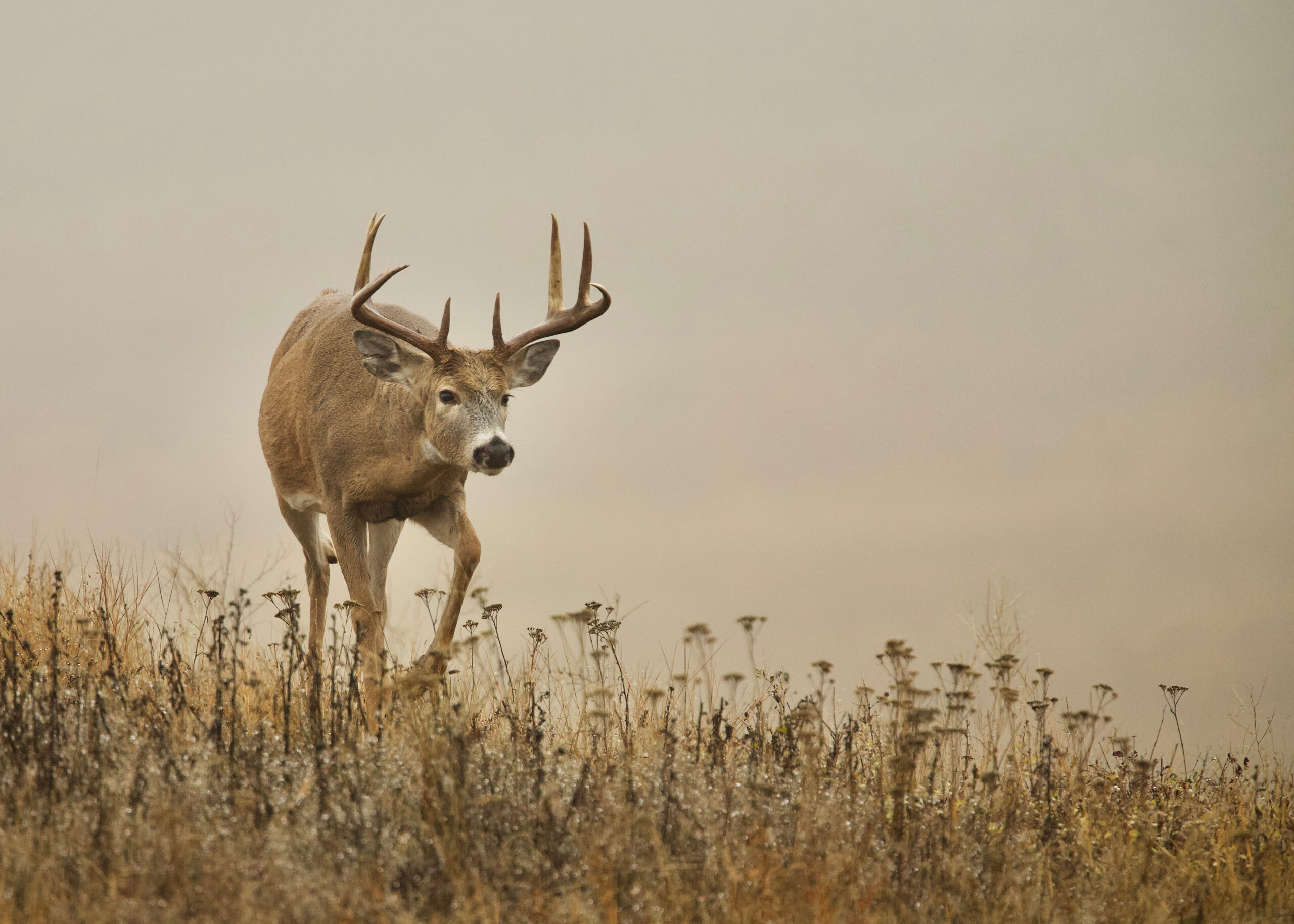
There is nothing like the rush that hits when a heavy-beamed buck slips out of a cedar thicket and turns his head into the light. Is he the one? This guide breaks down how to field judge a 170 inch whitetail with simple, repeatable steps you can use in seconds. Whether you hunt wild country or book a guided adventure at Cedar Ridge Whitetails in southern Illinois, you will walk into the woods with more confidence and a clearer plan.
What Makes a 170 Inch Whitetail Special
A 170 inch whitetail is a true trophy. Most deer hunters will only see a buck at this level a few times in their lives. This score reflects a big frame, excellent tine length, solid mass, and clean symmetry. It can be a giant 10- or 12-point typical, or a non-typical with extras that push it over the mark. While official scores rely on exact measurements, you can estimate in the field by reading the buck’s frame like a checklist: beams, spread, tine length, and mass.
At Cedar Ridge Whitetails, hunters often target this class because our diverse habitat grows both body and bone. Mature timber, pine and cedar thickets, and food plots create year-round nutrition and security. That means bucks can reach the age and frame needed to flirt with or break into the 170s. Knowing how to field judge helps you make the call when your shot window opens.
Know the Basic Score Parts
Almost every scoring system for typical antlers breaks down into similar building blocks: main beams, inside spread, tine lengths, and mass. Here is how each part adds up on a 170 inch whitetail.
Main Beams
Each beam runs from the base up and around the rack. On a 170-caliber buck, beams often land between 24 and 27 inches per side. Beams that stretch past the nose when the head is turned broadside signal strong length. Long beams are the backbone of a big score.
Inside Spread
The inside spread is the widest distance between the main beams. Many mature bucks in the 170 class carry a spread of 17 to 21 inches. Ear tip to ear tip is around 16 to 17 inches on a relaxed buck, which makes a handy field ruler.
Tines
Tine length drives much of the score. On a framey 10- or 12-point, look for G2s and G3s in the 10 to 12 inch range, G4s in the 6 to 10 inch range, and brows of 4 to 6 inches. Long, even tines stack points fast.
Mass
Mass is measured in four spots per side between the burr and the G4. Thick bases and steady circumference hold a lot of score. On a 170 inch whitetail, total mass often lands around 32 to 36 inches combined across both sides.
The 10-Second Field Formula
Use this fast formula from your stand or blind. It is designed to keep your head clear in the moment while giving you a realistic number.
- Lock the Frame: Is he wide and deep with a strong sweep to the beams? If yes, stay on him.
- Spread Check: Compare the inside spread to the ears. If it looks about ear tip width or a touch wider, call it 17 to 19 inches. If it appears clearly outside the ears, call it 20 to 21.
- Beam Estimate: If the beams reach the end of the nose or more when broadside, score each at 25 to 27 inches.
- Tine Math: Count both sides. If G2s and G3s look a foot long and G4s are strong, you are likely stacking 60-plus inches of tines total.
- Mass Sweep: Thick at the bases, thick past the G2, still thick near the G3 and G4 suggests 16 to 18 inches of mass per side.
- Add It Fast: Beams + spread + tines + mass. If you land near or above 170, you have your buck.
A Sample 170 Score in the Field
Use this as a mental picture. Beams: 26 + 26 = 52. Inside spread: 19. Tines total: brows 10, G2s 22, G3s 20, G4s 14, for 66. Mass total: 33. Add them up: 52 + 19 + 66 + 33 = 170. If the buck in front of you fits that picture, he is a 170 inch whitetail candidate.
Read a Buck’s Body to Support Your Call
Body cues help confirm your estimate. A rack can look big on a small deer, which leads to inflated scores. A 170 class rack usually rides on a mature body with these traits:
- Thick Neck: During the rut, the neck blends into the chest without a clear line at the brisket.
- Deep Chest and Heavy Shoulders: The front end looks blocky and tips the scale forward.
- Rounded Belly and Swayed Back: More common at 4.5 years and older.
- Roman Nose and Wide Head: A long, thick face often signals maturity.
- Short-Leg Look: A mature buck seems low to the ground because of a deep body.
At Cedar Ridge Whitetails our guides often spot these traits first, then confirm antler estimates. A big frame on a big body is your green light that a buck could hit 170 or more.
Antler Details That Separate 160 From 170
The G2 and G3 Test
If the G2 and G3 on each side push 10 to 12 inches and appear balanced, your score jumps fast. If one side carries a weak G3 or G4, expect a drop toward the 160s unless mass and beams make up ground.
Mass That Carries
Do not just look at the bases. On a 170 inch whitetail the antlers stay thick past the G2 and beyond. If the circumference near the G3 looks more like a baseball bat than a broomstick, you have the kind of mass that pushes numbers up.
Beam Turn and Length
Look for beams that run forward and then sweep back toward the nose when broadside. Beams that end well past the nose tip are rare and usually belong to upper-tier deer.
Spread Without Illusion
Spread can trick you. A flared rack can look wider than it truly is. Use the ear-to-ear check and judge spread only when the head is level. A head-on buck often looks wider than he measures.
Angle and Distance Tricks That Fool Hunters
Even seasoned hunters misjudge a 170 inch whitetail because of angle and distance. Lock in these checks:
- Broadside is Best: Side views show true tine length and beam depth. Quartering-to hides length. Quartering-away can make beams look longer than they are.
- Head Level: If the head is tilted, spread and tine length get distorted. Wait for a neutral pose if time allows.
- Light Direction: Backlit antlers lose detail. Try to view from an angle with side light that reveals beam length and tine tips.
- Distance Cues: At 200 yards or more, thin tines disappear. Use good glass and compare to the buck’s ear length and nose-to-eye reference.
Seasonal Factors That Change Your Estimate
Antlers in velvet look larger because velvet softens edges and adds perceived mass. After velvet shed, points sharpen and true lines appear. During peak rut, swollen necks and bristled hair make bodies look bigger and antlers seem slightly smaller by comparison. In late season with a winter coat, body mass can hide the rack’s size. Adjust your eye by focusing on hard numbers like beam length relative to the nose and ear-width spread.
Common Mistakes When Judging a 170 Inch Whitetail
- Overweighting Spread: Huge spreads are rare. Do not add too much for width. Focus on beams and tine length.
- Ignoring Weak Tines: One short G3 or missing G4 can pull a 170 frame down fast.
- Buying the Base: Thick bases look impressive but matter less if mass fades after the G2.
- Counting Stickers as Big Inches: Many stickers add little if they are short. Extras help, but tine length rules.
- Rushing the Shot: Take a breath, run your formula, then decide. A 10-second check beats a lifetime of what-ifs.
Practice That Builds a Reliable Eye
Field judging is a skill you can train before your hunt. Create a quick routine and repeat it until it is automatic.
- Study Reference Bucks: Look at photos and videos with known scores. Say your estimate out loud, then check the real numbers.
- Use Ear and Nose Rulers: On every picture, compare beams to the nose and spread to the ears. Lock those proportions in your mind.
- Score Trail Cam Photos: Estimate, write it down, then compare when the deer is harvested and measured.
- Practice on 3D Targets: Some targets have scoring references. Learn to adjust for angles and shadows.
- Film Your Hunts: Review footage in slow motion. You will spot details you missed in real time and improve fast.
Fast Stand Checklist
- Is the spread at or beyond ear width by a clear margin?
- Do the beams reach to or past the nose when broadside?
- Are G2s and G3s near a foot long and even on both sides?
- Does mass stay thick past the G2 and near the G3 and G4?
- Is the body mature with a deep chest and thick neck?
Three Realistic Field Scenarios
Scenario 1: The Wide Tease
The buck looks very wide, but beams end near the eye, and G3s are short. You tally 20 spread, 46 beams, 52 tines, 28 mass. Total is 146. A pass if you want a 170 inch whitetail. The spread fooled you, but the beams and tines did not back it up.
Scenario 2: The Beam King
Narrow but deep beams that run to the nose and beyond. Spread looks 17. Beams 27 each for 54. Tines look strong with G2s and G3s near 12, G4s at 8. Mass carries. You add 17 spread, 54 beams, 66 tines, 34 mass. Total is 171. That is a green light.
Scenario 3: The Rut Bully
Massive body and thick bases. Spread 18. Beams 25 each for 50. Tines strong on the right, but the left G3 is short. Tines total 58. Mass 36. Total is 162. Impressive, but not a 170 unless hidden extras show up.
Gear Tips That Help You Judge Faster
- Quality Binoculars in the 10x range sharpen tine tips and beam ends.
- A steady rest or shooting sticks help you hold the image and do math under pressure.
- Rangefinder readings curb distance illusions and help compare with body references.
- Notebook or phone notes with your score formula keep your checklist fresh.
Why Cedar Ridge Whitetails Is a 170-Class Destination
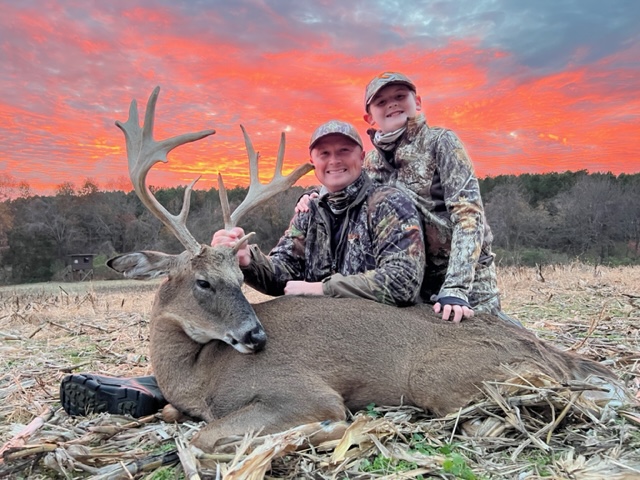
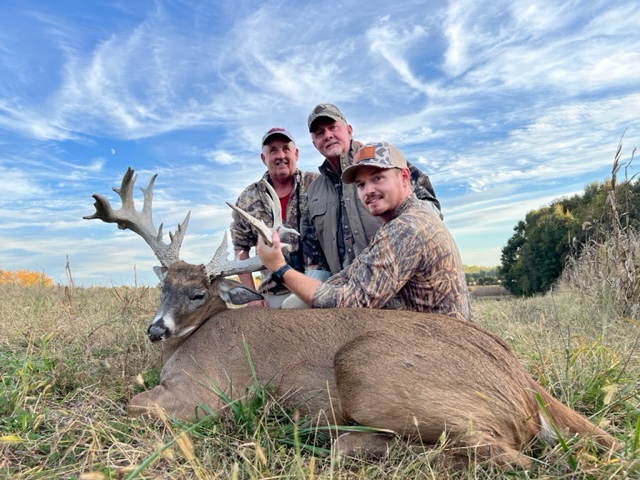
If your dream is to put hands on a 170 inch whitetail, Cedar Ridge Whitetails stacks the odds in your favor with a private, guided experience. Our family-owned preserve in southern Illinois blends mature timber, pine and cedar thickets, thick draws, cornfields, and food plots into a deer paradise. Bucks have cover, nutrition, and low pressure. That is how they reach the frame and age needed for trophy scores.
Every hunt at Cedar Ridge Whitetails is private to your group. Your guide focuses only on you, your goals, and the deer you want to hunt. We offer targeted trophy classes that fit your dream and your budget, including 170 to 179 inches, 180 to 199 inches, and 200 inches and above. On-site lodging keeps you close to the action and comfortable between hunts. From first light walks to evening sits over travel routes, you will be in the right place at the right time.
Our guides help you score fast and right in the field. They know the deer, the terrain, and the angles that matter. When a giant steps out, you will not be guessing. You will have a clear plan, a steady rest, and the confidence to take the shot.
Putting It All Together
Field judging a 170 inch whitetail does not have to be complicated. Use a simple formula, trust repeatable body and antler cues, and be honest with what you see. Remember this core picture: beams near 25 to 27 each, inside spread around 18 to 20, G2s and G3s close to a foot, G4s solid, and mass that stays thick well past the G2. Add it up in your head. If the total breaks 170, you likely found the buck you came for.
With practice and the right habitat, dreams turn into moments you will never forget. If you are ready for a guided hunt built around adventure and precision, Cedar Ridge Whitetails can help you write that story. Step into southern Illinois, settle into your stand, and wait for the frame you trained your eye to see. When he turns and the beams sweep past the nose, you will know exactly what to do.
Ready to chase your 170 inch whitetail and make the call with confidence? Reach out to Cedar Ridge Whitetails, lock in your dates, and let our team guide you from the first glassing session to the grip and grin. Your next hunt can be the one you talk about for the rest of your life.
Leave A Comment